
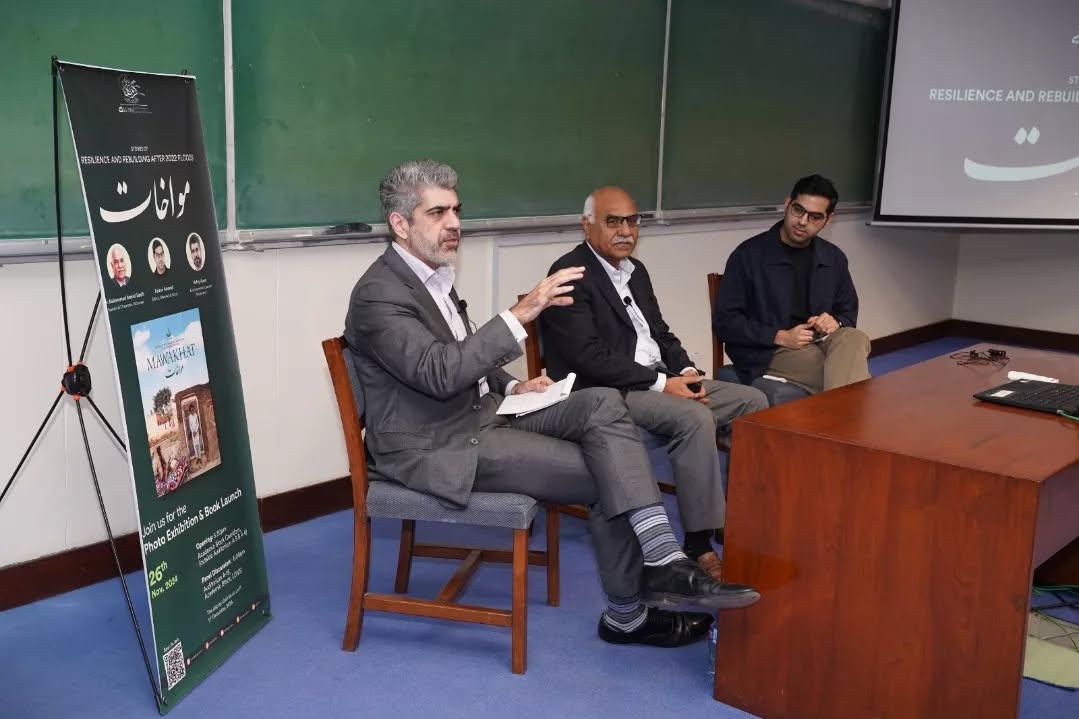
In collaboration with the Gurmani Centre for Languages and Literature (GCLL) at LUMS, Akhuwat recently launched its new book Mawakhat: Stories of Resilience and Rebuilding, a compelling collection of stories and portraits of the affected people in the aftermath of the catastrophic 2022 floods in Pakistan. The floods displaced around 33 million individuals across several districts in Sindh, Balochistan, Khyber Pakhtunkhwa, and Punjab and left behind immense destruction in its wake, including the loss of 1700 lives. The book is a tribute to the resilience of the affected communities and the enduring spirit of solidarity, which allowed Akhuwat to help facilitate the rebuilding of more than 6000+ houses.
The event included prominent speakers such as Dr. Amjad Saqib, Founder & Chairman, of Akhuwat, Ahmad Rafay Alam, lawyer and environmental activist, and Faizan Ahmad, Editor of Mawakhat. Dr. Amjad shared his experiences from the 2022 floods, where he witnessed the devastation firsthand. He was moved by what he saw though he had been interacting with underprivileged and marginalized people for decades. He also shared his memories of starting Akhuwat with scant resources and positioned Mawakhat, solidarity between the haves and have-nots, as a transformative alternative to the inequitable and exploitative economic systems prevalent today.
Rafay Alam pointed toward the rampant consumption fueled by capitalism in wealthier nations, which exploit natural resources from around the world and prioritize profit. Highlighting the devastating social and economic impacts of Global Warming, Mr. Alam noted that these floods caused more than just infrastructural losses; they disrupted fundamental aspects of life in rural areas and disconnected people from their past. He argued for a broader approach to recovery and emphasized that the wealthier nations and privileged classes needed to take accountability for the devastation caused by their relentless consumerism.
Faizan Ahmad, editor of Mawakhat, shared his experiences of documenting stories and capturing photographs in flood-stricken areas. He discussed the challenges of representing the affected individuals sensitively, ensuring that their dignity and self-respect were preserved in every image and narrative. He highlighted that his team aimed to encapsulate not only the stories and struggles of the people but also the cultural richness of the communities they visited across Pakistan.